



Dear community,
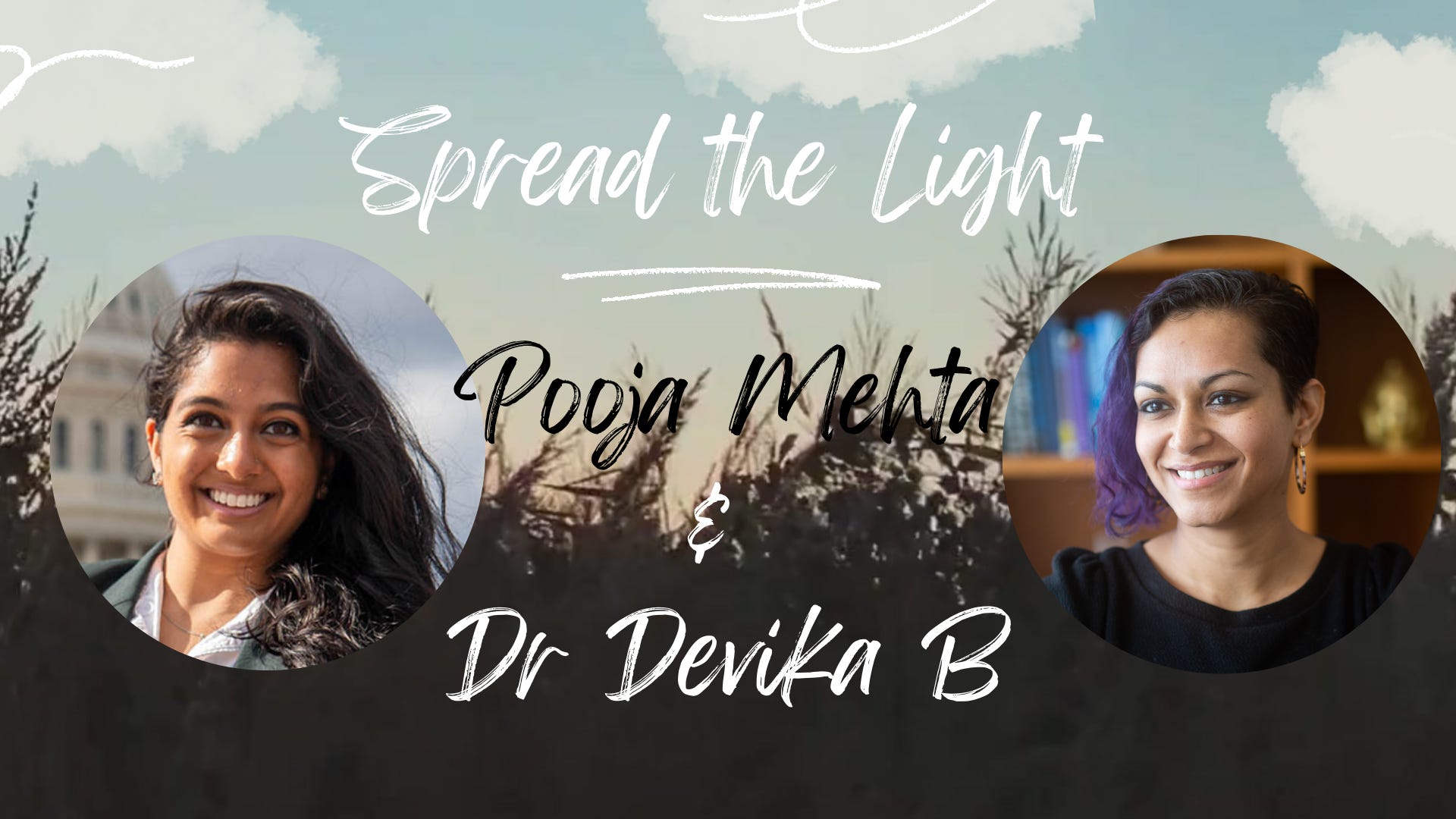
In honor of National Minority Mental Health Awareness Month, I’m so pleased to feature the thoughtful perspectives of my friend and colleague, Pooja Mehta.
💫 Spread the light with Dr Devika B. Conversations that dispel stigma and stereotypes and instead, spread hope and light — also on YouTube, Apple, Spotify
Because stigma festers in the dark and scatters in the light
About Pooja Mehta:
Pooja Mehta serves as Senior Associate of Activist Engagement at Inseparable, focused on national mental health policy, and with me on the National Board of Directors at the National Alliance on Mental Illness (NAMI). She’s been a powerful mental health advocate since she was 19 and lives with anxiety with auditory hallucinations, depression, and lost her brother Raj to suicide in 2020.
Hear from her on:
- How best to craft a lived experience message to drive policy change
- How she centers showing up as a South Asian woman in her advocacy
- What current suicide prevention efforts can miss
- An annual tradition in honor of Raj to foster kindness and connectedness
Trigger warning: In this episode, we talk about death by suicide, suicidal ideation, anxiety, auditory hallucinations, and depression.
Above, you’ll find the audio and video recording of the podcast episode and on the Substack app/website, you’ll find a transcript. If you’d prefer to watch this conversation on YouTube, please click here.
Click here to catch up on other Spread the light columns, in addition to other posts organized by column type, going back to our newsletter’s launch in January 2023.
If you or a loved one needs help for a mental health crisis, don’t hesitate to call or text 988 — or reach them online here. Find other resources here, search for a US treatment facility here, and find a US-based therapist here.
Wishing you light,
Dr Devika Bhushan
“I am the child of immigrants — many of us are — and we grew up hearing how our parents, our peers, our contemporaries left everything they knew to start a life in an entirely foreign country with the intention of making life better for themselves, with the intention of making life better for their children.
And I would say that taking care of your mental health is not only a part of that, it is fundamental to that.” —Pooja Mehta





Pooja Mehta on mental illness recovery and advocacy as a South Asian American woman